 |
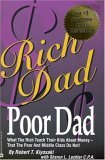
Rich Dad, Poor Dad: What the Rich Teach Their Kids About Money--That the Poor and Middle Class Do Not!by Robert T. Kiyosaki, Sharon L. Lechter |
| Personal-finance author and lecturer Robert Kiyosaki developed his unique economic perspective through exposure to a pair of disparate influences: his own highly educated but fiscally unstable father, and the multimillionaire eighth-grade dropout father of his closest friend. The lifelong monetary problems experienced by his "poor dad" (whose weekly paychecks, while respectable, were never quite sufficient to meet family needs) pounded home the counterpoint communicated by his "rich dad" (that "the poor and the middle class work for money," but "the rich have money work for them"). Taking that message to heart, Kiyosaki was able to retire at 47. Rich Dad, Poor Dad, written with consultant and CPA Sharon L. Lechter, lays out his the philosophy behind his relationship with money. | |
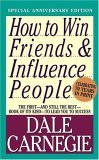 |
How to Win Friends & Influence Peopleby Dale Carnegie |
| This grandfather of all people-skills books was first published in 1937. It was an overnight hit, eventually selling 15 million copies. How to Win Friends and Influence People is just as useful today as it was when it was first published, because Dale Carnegie had an understanding of human nature that will never be outdated. Financial success, Carnegie believed, is due 15 percent to professional knowledge and 85 percent to "the ability to express ideas, to assume leadership, and to arouse enthusiasm among people." He teaches these skills through underlying principles of dealing with people so that they feel important and appreciated. He also emphasizes fundamental techniques for handling people without making them feel manipulated. Carnegie says you can make someone want to do what you want them to by seeing the situation from the other person's point of view and "arousing in the other person an eager want." You learn how to make people like you, win people over to your way of thinking, and change people without causing offense or arousing resentment. |